
Table of contents
Choosing the right casement window handles can feel harder than it should, especially when you are matching hardware to timber or metal windows rather than modern uPVC. At Trade Door Handles we supply a large range of casement window handles, fasteners, stays and accessories for homes, workplaces, schools, colleges and commercial buildings across the UK.
We stock & supply locking and non-locking options in finishes to match your decor, from brands including Carlisle Brass, Heritage Brass, Zoo Hardware, From The Anvil, ERA and Fab and Fix, plus English makers such as Samuel Heath, Frank Allart, Croft Hardware and Kirkpatrick. This guide explains the whole casement window hardware family so you can choose the right casement window handles with confidence.
What Is a Casement Window?
Supplied by Trade Door Handles, trusted UK supplier of architectural ironmongery since 1976, with quick nationwide delivery.
A casement window is hinged at the side and swings open like a small door, unlike a sliding sash window that moves vertically. Casements appear in both timber frames and steel or metal frames, and each needs its own casement window handles, fasteners and stays to open, close and hold the window in place. This guide covers timber and metal casements rather than uPVC.
Flush and Stormproof Casement Windows
Most timber casements are either flush, sitting level within the frame for a traditional look, or stormproof, with a stepped, overlapping edge for better weather resistance. Both use the same core casement window handles, but the exact fastener and hinge can differ, so check your window before choosing your casement window handles.

Timber and Metal (Steel) Casement Windows
Timber casements take the widest choice of casement window handles and stays. Steel casements are slimmer and often need dedicated fittings - From The Anvil produce a steel window hardware range built specifically for steel-framed windows, giving smooth operation and a coordinated look throughout a property.
What Hardware Do You Put on a Casement Window?
Every casement relies on three groups of hardware working together to stay secure, weathertight and easy to use. Get your casement window handles and fittings right and the window seals properly and lasts for years.
- Handles and fasteners - the casement window handles that pull the window shut and hold it against the frame.
- Stays - the arm that holds the window open and stops it slamming in the wind.
- Hinges - the pivot that lets the casement swing open and closed.
Browse the complete casement window hardware collection, which brings fasteners, stays and accessories together in one place.
Casement Window Handles and Fasteners Explained
On a side-hung casement, the item most people call the handle is technically a fastener. The casement window fastener fits to the opening edge and rotates to draw the window tightly shut against draughts and rain, so it controls both security and weather performance. See the full range of casement window fasteners at Trade Door Handles. Below are the main styles of casement window handles you will come across.
Where Does the Casement Window Fastener Go?
The fastener mounts on the stile (the vertical edge) of the opening casement, on the side furthest from the hinges, and engages a plate on the frame. Handing matters - casement window handles are supplied for windows opening to the left or right, so confirm which way yours opens before ordering.
Hook Plates and Mortice Plates

Casement Fasteners With a Night Vent

Cockspur Window Handles
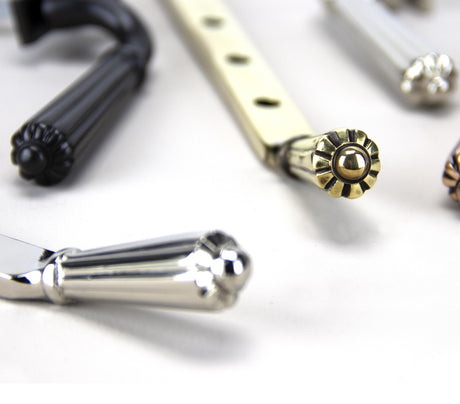
A cockspur casement window handles are a traditional wedge-shaped fastener that closes down onto a small striker or wedge plate fixed to the frame. It is one of the most common casement window handles on older steel windows and period timber casements, where the sloped spur pulls the window tightly shut against the seal. Cockspur casement window handles are usually handed left or right and come in different stem heights to suit the depth of the frame rebate, so check yours before ordering. They pair well with black, pewter, chrome and antique finishes.
Casement Window Stays Explained
What Size Do Casement Stays Come In?
Traditional peg stays come in three lengths, though many modern versions are only made in the 10 inch size:
- 8 inch - smaller windows and top vents.
- 10 inch - the most popular all-round size, and often the only length made today.
- 12 inch - larger casements that open wider.
Measure your casement before pairing stays with your casement window handles.

Locking Pins for Casement Stays

Peg Stays and Friction Stays

Casement Window Hinges
The hinge lets the casement pivot open. Timber windows usually take a butt hinge or a purpose-made casement hinge, while steel windows often rely on friction stays. If you are replacing them, our casement hinges and window hinges range covers the options - match the hinge finish to your casement window handles for the tidiest result.
Are Casement Window Handles Lockable? Security and Restrictors
Yes - casements can be made very secure. Lockable casement window handles and key-locking fasteners stop the window being opened from outside, which matters most on ground-floor and accessible windows.
- Locking fasteners - key-locking casement window handles for everyday security.
- Window restrictors - limit how far the window opens, supporting the common 100mm child-safety guidance.
- Night vent fasteners - secure ventilation without opening the window fully.
Find restrictors and extras in our casement window accessories collection.
Stainless Steel Hardware for Coastal Areas
Finishes to Match Your Decor
Casement Window Handles: Comparison and Alternatives
Understanding how the parts differ helps you match casement window handles and fittings first time:
- Fastener vs stay - the fastener holds the window shut and secure; the stay holds it open. Most casements need both.
- Hook plate vs mortice plate - surface-mounted versus recessed keeps; stormproof windows usually take a hook plate, flush windows a mortice plate.
- Peg stay vs friction stay - fixed opening positions versus infinitely adjustable tension.
- Cockspur vs standard fastener - a traditional wedge for period steel and timber windows versus modern casement window handles.
For sash, fanlight and espagnolette fittings beyond casements, see our wider window furniture range, part of the full architectural ironmongery offering we have built over nearly 50 years in the trade.
Frequently Asked Questions
Summary
What hardware do you put on a casement window?
A casement window normally needs a fastener - one of the casement window handles that pulls it shut - a stay to hold it open, and hinges to pivot on. On steel windows a friction stay can act as both the stay and the hinge.
What is a casement window fastener with a night vent?
A night vent fastener has an extra catch that lets you lock the window in a slightly open position for secure ventilation, then close it fully when required.
What size do casement window stays come in?
Traditional casement stays are made in 8 inch, 10 inch and 12 inch lengths. The 10 inch size suits most windows, with 8 inch for small vents and 12 inch for larger casements.
Are casement windows lockable?
Yes. Key-locking fasteners and lockable casement window handles secure the window, and restrictors can limit how far it opens for child safety.
What is a cockspur window handle?
A cockspur handle is a traditional wedge-shaped fastener that closes down onto a striker plate on the frame. It is common on older steel and timber casement windows.
Which casement window handles are best for coastal areas?
Grade 316 stainless steel casement window handles and matching hardware resist salt corrosion far better than standard finishes, making them the right choice for seaside and exposed properties.
Casement window handles on side-hung windows are usually fasteners that pull the window shut and seal it against the weather.
Fasteners need the correct keep - a hook plate for stormproof windows or a mortice plate for flush casements - and must be handed left or right.
Night vent fasteners allow secure ventilation, and cockspur or monkey tail casement window handles suit period timber and steel windows.
Casement stays hold the window open in 8, 10 and 12 inch peg-stay sizes, with locking pins often sold separately.
Hinges or integrated friction stays let the casement pivot; match finishes across casement window handles, stays and hinges.
Lockable casement window handles, restrictors and stainless steel cover security, child safety and coastal durability.
Ready to fit out your windows? Browse the full casement window handles collection at Trade Door Handles for fasteners, stays, hinges and accessories in every finish, with quick UK delivery.