
Grade 316 Stainless Steel Door Handles: Your Guide to Coastal‑Proof Hardware
Table of contents
Every architect, builder or homeowner knows that the hardware chosen for a project must stand up to its environment. In coastal areas the combination of salt spray, moisture and UV can quickly corrode conventional metal fittings, leaving them unsightly and unsafe. This guide dives deep into the differences between stainless steel grades 202, 304 and 316, explains why Grade 316 stainless steel door handles offer the greatest protection, and introduces the CRES CR‑103 range from Frelan Hardware—engineered for demanding projects.
Trusted Since 1976: Expert Ironmongery & Nationwide Service
Supplied by Trade Door Handles, trusted UK supplier of architectural ironmongery since 1976, with quick nationwide delivery. Our family‑run business has served thousands of customers across the UK from showrooms in Kendal and Carlisle, earning a reputation for expert advice and reliable products.
Understanding Stainless Steel Grades
Grade 202: Budget friendly but less corrosion resistant
Composition and cost – Grade 202 stainless steel substitutes expensive nickel with manganese and nitrogen. It typically contains around 17–19 % chromium and about 4–6 % nickel. This makes it cheaper than 304 or 316 but also more susceptible to rust.
Strength and uses – Yield strength is higher than 304, making 202 strong, but its low nickel content reduces its corrosion resistance. It’s commonly used for indoor railings, decorative items and inexpensive kitchenware.
Corrosion risk – Tests show that 202 rusts quickly when exposed to salt water. For coastal properties or humid environments it is not recommended.
Grade 304: The general purpose option
Composition – Grade 304 contains roughly 18 % chromium and 8 % nickel, which produces a passive oxide layer that protects against corrosion. It is widely used for kitchen equipment and general hardware.
Performance – 304 offers good corrosion resistance in most indoor and mildly corrosive environments and is easy to form and weld. It’s also cost‑effective, making it popular for interior door furniture.
Limitations – In saline or coastal atmospheres chloride ions can penetrate the passive layer and cause pitting. Without molybdenum it is more susceptible to corrosion than marine‑grade steels.

Grade 316: Marine‑grade stainless steel
Composition – Grade 316 contains similar chromium and nickel to 304 but crucially adds 2–3 % molybdenum. The molybdenum improves resistance to chlorides and acidic environments. Some manufacturers refer to this as “marine‑grade” stainless steel.
Corrosion resistance – The molybdenum content dramatically increases the alloy’s ability to withstand pitting, crevice corrosion and tea‑staining in salt air. It resists industrial pollution, acidic rain and surface damage, making it suitable for harsh coastal or urban environments.
Applications – Because of its superior corrosion resistance and durability, grade 316 is used in chemical processing equipment, marine fittings and coastal architecture. It is the default specification for projects within 5–10 miles of the sea.
Why Grade 316 Stainless Steel Door Handles Are Best for Coastal Projects
Choosing the right hardware is about more than aesthetics—it directly influences a building’s longevity. Here are the key reasons Grade 316 stainless steel door handles outperform grades 202 and 304 in demanding environments:
Enhanced corrosion resistance – The molybdenum in 316 resists pitting and crevice corrosion caused by salt air and chlorides. Lower grades like 304 or 202 lack this element and therefore corrode faster.
Greater durability – 316 retains its strength and appearance even when exposed to moisture, industrial pollution and temperature fluctuations. This reduces maintenance and replacement costs compared with cheaper alloys.
Long‑term value – Although 316 stainless steel costs more initially, its extended lifespan makes it cost‑effective over time. Using 304 or 202 may save money up front but often leads to rust stains, seized mechanisms and premature failure.
Fire and safety compliance – Many Grade 316 door handles, including the Frelan CRES range, meet EN 1906 Grade 4 corrosion resistance and FD30/60 fire ratings, ensuring compliance with building regulations.
Suitable for interior and exterior use – Unlike cheaper grades that are only suitable indoors, 316 handles can be installed on external doors and gates where they will be exposed to the weather.


Introducing the CRES CR‑103 Lever: Frelan’s Coastal Solution
Frelan Hardware’s CRES range (Corrosion Resistant Stainless Steel) was developed specifically for coastal and high‑humidity environments. The CR‑103 lever combines minimalist design with robust engineering:
Material – Solid Grade 316 stainless steel ensures exceptional corrosion resistance and strength.
PVD finish – Each handle is protected with a Physical Vapour Deposition coating. PVD creates a molecular bond with the steel, giving superior scratch resistance and UV stability compared with conventional plating.
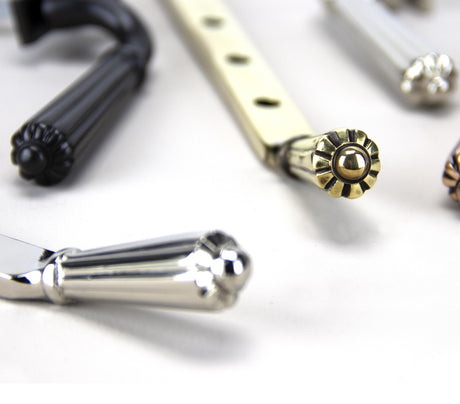
Finishes available – Antique Brass, Black, Dark Bronze, Satin Brass and Satin Stainless Steel match both contemporary and traditional interiors.
Corrosion and fire ratings – Handles are rated Grade 4 for corrosion resistance and certified for FD30/60 fire performance, making them suitable for residential and commercial projects.
Mechanical performance – A 25‑year mechanical guarantee reflects the quality of the sprung rose mechanism. The security grub screws and supplied Allen key ensure a secure installation.
Versatility – CRES levers are available on round, square or oval roses and backplates, plus multipoint locking versions and matching escutcheons and door stops. They suit door thicknesses of 44–54 mm, with longer spindles available on request.
By using a Grade 316 stainless steel door handle like the CRES CR‑103 lever, builders and specifiers can deliver modern design without sacrificing durability. The range is part of Frelan’s commitment to quality and is sold exclusively in the UK through Trade Door Handles.
Finishes at a glance
| Finish | Description |
|---|---|
| Antique Brass | Warm, aged brass tone with PVD protection. |
| Black | Deep matte black created using a PVD coating for UV resistance. |
| Dark Bronze | Rich bronze hue suitable for industrial or heritage themes. |
| Satin Brass | Subtle brushed brass appearance that resists fingerprints. |
| Satin Stainless Steel | Classic brushed steel look, ideal for modern settings. |

Practical Advice for Specifiers and Coastal Property Owners
Prioritise Grade 316 – Always specify marine‑grade stainless steel for projects within 10 miles of the coast or in high‑humidity zones. Inferior grades can corrode within a single winter.
Opt for PVD finishes – PVD coatings bond at a molecular level, enhancing scratch and UV resistance. They outperform traditional lacquers or powder coats.
Clean regularly – Maintenance is simple: wipe handles with warm soapy water and a soft cloth. Avoid abrasive cleaners to preserve the PVD layer.
Request samples – Before drilling or morticing, request a sample to check the finish and ensure compatibility with your door thickness and centres.
Choose complementary hardware – For visual consistency, pair CRES levers with matching escutcheons, turns, door stops or pull handles. Trade Door Handles stocks the entire collection.
About Trade Door Handles
Trade Door Handles is part of T.H. Wiggans Ironmongery Ltd, a family‑run business that has supplied architectural hardware across the UK since 1976. With showrooms in Kendal and Carlisle, we offer expert advice and quick nationwide delivery. Our collections include:
Architectural Ironmongery – Explore door closers, door stays and other specialist fittings in our architectural ironmongery collection.
Door Furniture – Discover handles, knobs and letter plates in various styles and finishes in our door furniture range.
Window Hardware – Complement your project with casement stays and fasteners from our window furniture collection.
Kitchen & Cabinet Hardware – Upgrade cabinets with pulls and knobs from our kitchen & cabinet hardware collection.
Locks & Latches – For security and performance, choose products from our locks and latches collection.
These categories showcase the breadth of our product offering and help builders, designers and homeowners find the perfect hardware for any project. By linking to our core collections, this page supports our website’s domain authority and demonstrates our expertise in architectural ironmongery.
Comparison of Grades for Door Handles
| Property | Grade 202 | Grade 304 | Grade 316 |
|---|---|---|---|
| Nickel content | 4–6 % | ≈ 8 % | ≈ 10 % plus 2–3 % molybdenum |
| Corrosion resistance | Low; unsuitable for coastal use | Good for general interiors | Excellent in salt and acidic environments |
| Cost | Lowest | Moderate | Highest but most durable |
| Typical applications | Indoor railings, low‑cost kitchenware | Kitchen sinks, interior door handles | Coastal door hardware, marine fittings |
Summary
Superior durability and corrosion resistance – Grade 316 stainless steel door handles are specifically designed for coastal and high‑humidity environments. The addition of molybdenum gives them exceptional resistance to salt spray and pollutants
Marine‑grade protection – Molybdenum helps Grade 316 hardware resist pitting, crevice corrosion and tea‑staining, making it ideal for harsh conditions
Lower grades corrode faster – Grades 202 and 304 contain less nickel and no molybdenum, so they corrode more quickly in salty or humid environments
CR‑103 lever quality – Frelan Hardware’s CRES CR‑103 lever combines Grade 316 stainless steel with PVD finishes and precision engineering, creating elegant yet long‑lasting door hardware (based on the product description you provided).
Long‑term value – Investing in Grade 316 stainless steel door handles ensures peace of mind and long‑term value because marine‑grade materials withstand coastal exposure and avoid premature failures
Frequently Asked Questions
What is the difference between Grade 202, 304 and 316 stainless steel for door handles?
Grade 202 uses less nickel (around 4–6 %) and more manganese, making it cheaper but less resistant to rust. Grade 304 has about 18 % chromium and 8 % nickel, offering good general corrosion resistance but not enough for coastal locations. Grade 316 contains similar chromium and nickel to 304 plus 2–3 % molybdenum, giving it superior protection against chloride‑induced pitting.
Why are Grade 316 stainless steel door handles recommended for coastal properties?
Molybdenum improves the alloy’s resistance to salt, moisture and industrial pollution. Projects within 5–10 miles of the sea should specify 316 hardware to prevent rust streaks, seized springs and premature failures.
What finishes are available in the CRES CR‑103 range?
The CR‑103 lever is available in Antique Brass, Black, Dark Bronze, Satin Brass and Satin Stainless Steel. Each finish is achieved via a PVD process for enhanced durability and colour stability.
How should Grade 316 door handles be maintained?
Maintenance is straightforward: clean periodically with warm soapy water and a soft cloth. Avoid abrasive chemicals to preserve the PVD coating and the passive oxide layer on the stainless steel.
Are Grade 316 door handles suitable for internal and external use?
Yes. Grade 316 handles like the CRES range are designed for both interior and exterior doors. They achieve Grade 4 corrosion resistance and are certified for FD30/60 fire performance, ensuring durability in all locations.
What door thicknesses and centres does the CRES CR‑103 lever suit?
Most CR‑103 levers suit door thicknesses of 44–54 mm. Standard centres are 38 mm for sprung rose versions and 43 mm for multipoint backplates, with longer spindles available on request.
Call to Action
Ready to upgrade your project with Grade 316 stainless steel door handles? Explore the full CRES collection and find the perfect CR‑103 lever for your home or development. Click the button below to shop the range: