
Table of contents
At Trade Door Handles, we supply a huge range of architectural ironmongery and hardware for homes, workplaces, schools, colleges and commercial buildings across the UK. That includes a comprehensive selection of timber fanlight window hardware, from the humble fanlight catch to openers, pole hooks and arm stays, in finishes to match almost any interior. In short, a fanlight catch is the small fastener that holds a fanlight window closed and is opened from below with a pole. This guide explains what a fanlight catch is, the types available, how the rest of the fanlight window furniture works together, and how to choose, fit and match the right parts for a traditional timber fanlight.
What Is a Fanlight Window?
Supplied by Trade Door Handles, trusted UK supplier of architectural ironmongery since 1976, with quick nationwide delivery.
A fanlight window is a small opening window set above a door or above a larger window, adding light and ventilation high on the wall where a full-size window would not fit. In traditional British homes the original fanlights were semi-circular, with glazing bars radiating out like the ribs of a fan, which is where the name comes from. Today the term covers any small top-mounted window, including rectangular top-hung and bottom-hung (hopper) timber windows that open on a hinge. Because they sit high up and out of easy reach, a fanlight window relies on dedicated hardware such as a fanlight catch, a pole hook and an arm stay to open, hold and secure it.

Where do you find fanlight windows?
You will find fanlight windows in a wide range of buildings, both period and modern:
- Domestic homes, especially Georgian, Victorian and Edwardian properties
- Above front doors and internal doors, borrowing light into hallways
- Schools, colleges and village halls
- Offices and other commercial premises
- Bathrooms, where high-level ventilation is useful for privacy
- Barns, workshops and outbuildings
Why do buildings have fanlight windows?
Fanlight windows serve two main purposes: light and ventilation. Set high on the wall, they let daylight reach deep into a room or hallway without sacrificing privacy or the wall space below. They are also excellent for ventilation, because warm air naturally rises and escapes through the top of the room. This is why you so often see them in bathrooms, kitchens and stairwells. Operating one safely from the ground is exactly where the fanlight catch and its matching pole come in.
Fanlight Window Hardware Explained
A complete fanlight setup is made up of several parts that work together. The fanlight catch keeps the window closed and held into its frame, while an opener, pole hook, winder or arm stay controls how far it opens and holds it in position. Below we break down each component so you can identify exactly what you need.
What is a fanlight catch?
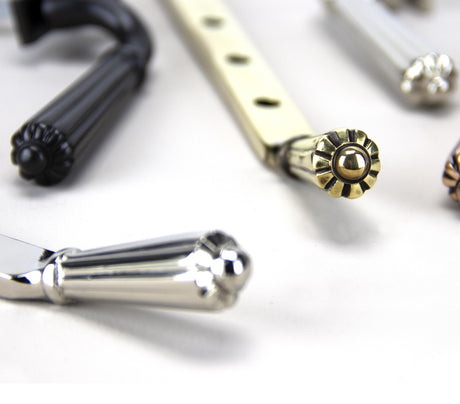
A fanlight catch is the fastener that holds a fanlight window shut. It is fixed to the bottom rail of the opening window and engages with a keep (a small striker plate) on the frame. Most designs feature a ring or a lever that you hook with a pole to release or close the window from below, which is why it is sometimes called a fanlight window catch. A quality fanlight catch is cast in solid brass and finished to match your other ironmongery, and many come as a locking version for extra security. We stock brass fanlight catch and chrome fanlight catch options, along with satin and antique finishes, so you can match your fanlight catch to the rest of the room. Browse our full range of fanlight catches to see the styles available.

Types of fanlight catch
Fanlight catches come in a few main styles, and knowing the difference makes replacement much easier:
- Ring catch: the most common style, with a ring that your pole hooks into. Cranked (offset) versions stand proud of the rail so the ring is easy to catch from below.
- Lever or handle catch: operated directly by hand, suited to lower fanlights that are within reach.
- Locking fanlight catch: a key-operated catch for windows where security matters, such as ground-floor or accessible openings.
Whichever you choose, the fanlight catch should suit how high the window sits and whether you will reach it by hand or by pole.
What are fanlight openers?
A fanlight opener is a mechanism that pushes the window open and pulls it closed, used where a simple catch and pole are not practical. Openers range from basic screw-down types to geared units, and they suit windows that are opened and closed frequently. You can see the options in our fanlight openers collection.
What are pole hooks?
A pole hook, sometimes called a window pole hook or opening pole, is the long reaching pole used to operate high-level windows. The hooked or forked end engages the ring on a fanlight catch, an opener or an arm stay, so you can open, close and secure a window that is well out of arm's reach. Choose a pole long enough to reach the catch comfortably from the floor: measure from floor level up to the fanlight and add a little for the angle. Telescopic poles suit rooms with high or sloping ceilings. Explore our pole hooks for fanlight, skylight and general window access.

What are quadrant arm stays?
A quadrant arm stay is a curved, slotted stay that holds a fanlight or top-hung window at a set opening angle. The curved arm slides through a bracket and locks at the chosen position, giving fine control over ventilation. Quadrant arm stays are usually sold as pairs, one for each side of the window, and they suit heavier timber fanlights that need support on both sides. See our quadrant arm stays for pairs and finishes.

What are roller arm stays?
A roller arm stay holds the window using a pivoting arm fitted with a small roller. As the window opens and closes, the roller runs against the edge of the window, guiding and supporting the movement and helping keep the window steady once set. Roller arm stays are typically sold as singles, making them a neat option for lighter fanlights or where only one stay is required. Our roller arm stays come in matching finishes to complete the look.

What are window winders?
A window winder is a geared handle mechanism that opens and closes a window by turning a handle rather than pushing directly. Winders give excellent mechanical advantage, which helps with stiff or heavy fanlights and with anyone who finds a pole awkward to use. Browse our window winders to compare styles.

What hinges do you use on fanlight windows?
Fanlight windows generally hang on butt hinges or specialist stay hinges, depending on whether they are top-hung, bottom-hung (hopper) or side-hung. The hinge choice affects how the window swings and which fanlight catch and stay will suit it. For timber fanlights we recommend solid brass or stainless steel hinges that match the finish of your fanlight catch and the rest of your window furniture.
How Do You Open a Fanlight Window?
Opening a fanlight window is straightforward once you know the sequence. For a typical pole-operated timber fanlight:
- Take your pole hook and reach up to the fanlight catch on the bottom rail of the window.
- Engage the hook with the ring or eye on the fanlight catch and pull down gently to release it.
- Use the pole to push the window open to the angle you want.
- Hook the arm stay or winder to hold the window in position.
- To close, reverse the steps, guiding the fanlight catch back into its keep until it engages.
How far do fanlight windows open?
How far a fanlight window opens depends on its stay and hinges. A quadrant or roller arm stay usually allows the window to open between 90mm and 150mm, which is enough for good ventilation while keeping the opening secure. Not every fanlight is designed to open fully; some older fixed fanlights above doors are purely decorative and do not open at all.
How to Replace or Fit a Fanlight Catch
Replacing a worn or broken fanlight catch is a straightforward job. The key is matching the new catch to the old one so it covers the same footprint. To replace a fanlight catch:
- Note the finish and style of your existing catch so the new fanlight catch matches your other ironmongery.
- Measure the fixing-hole centres and the overall size, so the new catch sits over the same fixings without leaving bare timber or filled holes on show.
- Unscrew the old catch from the bottom rail and the keep from the frame.
- Offer up the new fanlight catch, mark and pilot the screw holes, then fix it to the bottom rail.
- Fit the matching keep to the frame, then test that the catch holds the window shut and releases smoothly with your pole.
If the original is an unusual pattern, take it with you or send a photo, and we can help you match a fanlight catch of the same size and finish.
Are Fanlight Windows Secure? Can You Lock a Fanlight Catch?
Security is a common question, particularly for ground-floor and accessible windows. In practice, most fanlight catches do not have a key lock. They are operated from the inside and use a sprung latch that snaps into the keep and holds the window closed on its own, so in normal use the catch keeps the window secure. Because fanlight windows are usually set high up and in awkward positions, manufacturers generally do not make key-lockable versions. If you do need to lock a fanlight, the simplest answer is to add a secondary locking device, such as a separate window lock, which holds the window shut independently of the fanlight catch. On accessible or ground-floor openings, that extra device is well worth fitting for peace of mind.
Choosing Fanlight Catch Finishes and Matching Period Ironmongery
Popular fanlight catch finishes
A fanlight catch is available in a wide choice of finishes to coordinate with your door and window furniture:
- Polished brass and satin (matt) brass
- Antique brass and aged finishes for period homes
- Polished chrome and satin chrome for a contemporary look
- Matt black and pewter for modern and heritage schemes
- Nickel and bronze for higher-end interiors
Selecting the same finish across your fanlight catch, door handles and hinges gives a coordinated, professional result.
Matching original and period fanlight hardware
Many fanlights in Victorian, Georgian and Edwardian homes still carry their original ironmongery. When you are restoring a period property, matching the pattern and finish of the original fanlight catch keeps the character intact and avoids a modern part looking out of place. Cast brass catches in antique or aged finishes, and hand-finished pieces from English makers such as Croft Hardware and Kirkpatrick, suit conservation and listed-building work well.
Comparing the parts: catch, stay and opener
It helps to know which part does which job, because they are not alternatives to one another. The fanlight catch holds the window closed and locked into the frame; the arm stay (quadrant or roller) holds it open at a chosen angle; and the pole hook, opener or winder is what you use to move it. Most fanlights use a fanlight catch and a stay together, reached by a pole. We supply all of these from many of the UK's leading manufacturers, including Carlisle Brass and Heritage Brass (M. Marcus) for dependable everyday hardware and From The Anvil for blacksmith-style finishes, so you can pick the quality and price point that suits your project. If your fanlight is uPVC rather than timber, the fittings differ, so always check that a fanlight catch is designed for timber before ordering. You can see the wider category in our window furniture range.
Frequently Asked Questions
What is a fanlight catch?
A fanlight catch is the fastener that holds a fanlight window closed. It fits to the bottom rail of the opening window and is released using a pole hook. Fanlight catches come in ring, lever and locking styles and in finishes such as brass, chrome and black.
What is a fanlight window?
A fanlight window is a small window set above a door or a larger window, used to add light and ventilation. Originally semi-circular with fan-shaped glazing bars, the term now covers most small top-hung and hopper windows in timber frames.
How do you open a high fanlight window?
You open a high fanlight window with a pole hook. The hooked end engages the ring on the fanlight catch or arm stay, letting you release, push open and secure the window from the ground.
Can you lock a fanlight window?
Yes. Fit a locking fanlight catch, which uses a key or snib to stop the window being opened from outside. This is recommended for accessible or ground-floor fanlights.
How do you replace a fanlight catch?
To replace a fanlight catch, measure the fixing-hole centres and match the finish of the original, unscrew the old catch and keep, then fix the new fanlight catch to the bottom rail and the keep to the frame, and test it with your pole.
Are quadrant arm stays sold in pairs?
Quadrant arm stays are usually supplied as pairs, one per side, while roller arm stays are normally sold as singles. The right choice depends on the size and weight of your fanlight.
How long should a window pole be for a fanlight?
Choose a window pole long enough to reach the catch comfortably from the floor. Measure from floor level up to the fanlight and add a little for the angle; telescopic poles suit high or sloping ceilings.
What finishes do fanlight catches come in?
Fanlight catches are available in polished and satin brass, antique brass, polished and satin chrome, matt black, pewter, nickel and bronze, so you can match them to your existing door and window furniture.
Summary
A fanlight catch is the fastener that holds a fanlight window closed and is released with a pole hook.
Fanlight catches come in ring, lever and locking styles, and in brass, chrome, black and other finishes.
Fanlight windows add light and ventilation and are common above doors and in bathrooms, schools and period homes.
Core fanlight window hardware includes the fanlight catch, openers, pole hooks, quadrant and roller arm stays, winders and hinges.
To replace a fanlight catch, match the fixing-hole centres and finish of the original.
Quadrant arm stays are usually sold in pairs; roller arm stays are usually sold as singles.
For security, choose a locking fanlight catch on accessible windows.