
Table of contents
What Are Flush Pulls?
Supplied by Trade Door Handles, trusted UK supplier of architectural ironmongery since 1976, with quick nationwide delivery.
Flush pulls are handles that sit level, or flush, with the surface of a door or drawer rather than protruding from it. Instead of a knob or bar you grip from outside, a flush pull has a shaped recess you hook your fingers into, so nothing sticks out beyond the face of the door. This is exactly why they are also known as recessed handles or flush pull handles.
Because they sit inside the door, flush pulls are the natural choice anywhere a raised handle would get in the way, snag clothing, or spoil a clean line. They are frequently specified for safety too: in busy kitchens, hospitals, schools and commercial spaces, a recessed handle means there is nothing protruding to walk into or catch yourself on. Form and function meet neatly in a single, unobtrusive fitting.
Flush pulls or recessed handles - is there a difference?
There is no real difference. Flush pulls, recessed handles, flush pull handles, recessed pull handles, inset handles and concealed door handles all describe the same idea: a flush pull door handle set into the surface so it finishes level. You will see the terms used interchangeably across the trade, so whichever phrase you searched for, you are looking at the same type of product.
Where Are Flush Pulls Used?
The great strength of flush pulls is their versatility. They suit kitchen and cabinet drawers, lightweight doors, and above all any door that slides, folds or disappears into a wall, where a standard handle simply would not work.
Kitchen cabinets and drawers
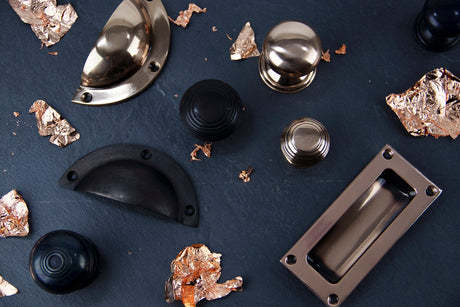
On kitchen and cabinet work, flush pulls give a discreet, minimalist grip that keeps door and drawer fronts clean and flat. They are popular on contemporary and handleless-style kitchens, and on drawers, where flush drawer pulls or flush drawer handles look neater than a bar handle. On cupboard fronts the same fitting is often called a flush cabinet handle or flush cabinet pull. You will find the full range in our cabinet flush pulls collection, which sits within our wider kitchen and cabinet hardware range.

Sliding doors, wardrobes and bi-fold doors
This is where flush pulls really earn their keep. On a sliding door there is no space for a handle that projects, because it would hit the frame or the adjacent door as it passes. A recessed pull sits safely within the door face and slides freely. The same logic applies to sliding wardrobes and bi-fold doors, which is why recessed sliding door handles, flush sliding door handles and inset sliding door handles are such common searches, along with flush door handles for sliding doors and inset handles for sliding doors. If you are fitting sliding wardrobe door handles, a flush pull is almost always the right answer.

Pocket doors and internal doors
A pocket door slides right back into a cavity in the wall, so any raised handle would be scraped off as the door disappears. Flush pulls, often paired with a matching edge pull or a pocket door finger pull to draw the door out of its cavity, are essential here. We stock everything you need in our pocket door hardware range, including dedicated pocket door flush pulls. Flush pulls can also be used on lightweight internal doors and cupboards where a flat, snag-free finish is wanted.

What Are Flush Pulls Made From?
Most quality flush pulls are made from solid metal for strength and a lasting feel. Common materials include solid brass, which plates beautifully into a wide range of finishes; stainless steel, which is hard wearing and ideal for modern and commercial settings; and zinc alloy or iron for budget and rustic styles. Better flush pulls are engineered so the recess is smooth and comfortable, with no sharp edges to catch a finger.
Popular finishes for flush pulls
Because flush pulls are usually brass or steel based, they come in the same broad choice of finishes as the rest of your ironmongery. The most popular include:
- Satin brass and antique brass, for warm, traditional and period looks
- Polished chrome and satin chrome, for a clean, classic finish
- Matt black, a favourite for modern, industrial and handleless kitchens
- Satin nickel, which pairs well with stainless appliances
- Satin and polished stainless steel, hard wearing for commercial use
- Pewter and aged finishes, for rustic and cottage interiors
Choosing one finish and carrying it across your handles, hinges and switches gives a co-ordinated, considered result.
Flush Pull Sizes and Shapes
Flush pulls come in several shapes to suit different jobs. Round or circular flush pulls are neat and traditional and are widely used on sliding doors and wardrobes. Rectangular and square flush pulls give a crisp, contemporary look and suit larger doors. Oval and D-shaped pulls sit somewhere between the two. You will also come across the flush ring pull, also called a flush pull ring handle, where a small ring folds flat into a recessed cup and lifts out when needed - a classic for lightweight sliding panels and hatches.
Sizes vary by style, so the key is to match the pull to the door. As a guide, smaller round flush pulls of around 40 to 65mm suit cabinet doors and light sliders, while larger rectangular pulls suit full-size wardrobe and internal sliding doors.
How to choose the right size
- Measure the width and thickness of the door or drawer front first
- Pick a pull large enough for a comfortable finger grip, but in proportion to the door
- On sliding and pocket doors, check the recess depth against the door thickness
- For a pair of doors, use two matching pulls so both sides look balanced
Locking Flush Pulls
Because flush pulls are so common on sliding and pocket doors, privacy and security often come up. Some flush pulls are designed with an integrated turn or latch, and on pocket and sliding doors a flush pull is frequently paired with a flush privacy latch or edge pull so a bathroom or bedroom door can be held shut. If you need a locking arrangement, choose a pocket or sliding door kit designed for the purpose rather than relying on the pull alone, and we can help you match the right components.

How to Fit a Flush Pull
Fitting a flush pull is different from fitting a knob or bar handle, because the pull has to sit inside the door rather than on top of it. In most cases you cut a recess to accept the body of the pull, then fix it in place. A typical fitting goes like this:
- Mark the position of the flush pull centrally and squarely on the door
- Drill or rout a recess to match the size and depth of the pull body
- Test the fit and ease the recess until the pull sits flush with the surface
- Fix the pull with the screws provided, or clip it in if it is a spring-fit type
- Check the pull is level and the door still slides or closes freely
If you are unsure, mock up the position with tape first, and always work to the manufacturer's template where one is supplied.
Choosing Flush Pulls for Your Project
We supply flush pulls from many of the UK's leading names, so you can match them to the rest of your scheme. For hand-forged, blacksmith-style pulls with real character, see From The Anvil. For classic, well-priced ranges in a wide choice of finishes, Carlisle Brass is hard to beat.
If you want to carry a single finish right through your home, we strongly suggest Heritage Brass. Everything Heritage Brass make is manufactured from brass and plated to a consistent finish, from window and door furniture to cabinet hardware, and even plug sockets and light switches. In every kitchen there are sockets, and near almost every door handle there is a light switch, so being able to match all of it - right down to your flush pulls - is a real advantage.
Flush Pulls vs Edge Pulls and Standard Handles
If you are weighing up your options, it helps to see how flush pulls compare with the alternatives:
- Flush pulls vs standard handles: a knob or bar handle offers a fuller grip and suits hinged doors and drawers, but it protrudes. Flush pulls give a flat, snag-free finish and are the only sensible choice where a handle cannot stick out.
- Flush pulls vs edge pulls: an edge pull fits to the top or side edge of a door for a completely handleless face, while a flush pull sits within the face itself. Many handleless kitchens and pocket doors use the two together.
- Flush pulls vs cut-outs: some flat-pack furniture uses a simple routed finger hole. A proper flush pull is more durable, more comfortable and far better looking, protecting the edge of the timber from wear.
For sliding, pocket and handleless applications, flush pulls remain the most practical and best-looking solution, which is why they are a staple of modern joinery.
Questions and Answers
What are flush pulls?
Flush pulls, also called recessed handles, are handles that sit level with the surface of a door or drawer. Instead of protruding, they have a shaped recess you hook your fingers into, so nothing sticks out. This makes them ideal for sliding doors, pocket doors and handleless kitchens.
What doors are flush pulls used on?
Flush pulls are used on kitchen cabinets and drawers, sliding doors, sliding wardrobes, bi-fold doors, pocket doors and lightweight internal doors. They suit any situation where a raised handle would get in the way or spoil a clean line.
Are flush pulls good for sliding doors?
Yes. Recessed sliding door handles are the standard choice because a protruding handle would hit the frame or adjacent door as it slides. A flush pull sits within the door face so the door moves freely, which is why they are so common on sliding wardrobes and pocket doors.
What sizes and shapes do flush pulls come in?
Flush pulls come in round, rectangular, square, oval and ring-pull shapes. Smaller round pulls around 40 to 65mm suit cabinets and light sliders, while larger rectangular pulls suit full-size wardrobe and internal sliding doors. Always match the pull to the door size and thickness.
How do you fit a flush pull?
You mark the position, cut a recess to match the pull body with a drill or router, test the fit so the pull sits flush, then fix it with the screws provided. Work to the manufacturer's template where one is supplied, and check the door still slides or closes freely.
Do flush pulls lock?
Some flush pulls include an integrated turn, and on pocket and sliding doors they are often paired with a flush privacy latch or edge pull to hold a door shut. For a locking arrangement, choose a pocket or sliding door kit designed for the job rather than relying on the pull alone.
Are inset handles the same as flush pulls?
Yes. Inset handles, recessed handles and flush pulls are different names for the same product - a handle set into the surface of a door or drawer so it sits flush. Inset and recessed handles for sliding doors are especially common on wardrobes and pocket doors.
Summary
Flush pulls, also called recessed handles, sit level with the surface so nothing protrudes
They are ideal for sliding doors, sliding wardrobes, bi-fold doors, pocket doors and handleless kitchens
They are also chosen for safety, as there is nothing sticking out to catch or walk into
Usually made from solid brass or stainless steel, they come in finishes such as satin brass, matt black, chrome and satin nickel
Shapes include round, rectangular, square, oval and flush ring pulls, sized to suit the door
Fitting means cutting a recess so the pull sits flush, then fixing it in place
Explore the full range in our cabinet flush pulls collection at Trade Door Handles