
Table of contents
Choosing Door Handles and Knobs for a Georgian, Victorian or Edwardian Home
Supplied by Trade Door Handles, trusted UK supplier of architectural ironmongery since 1976, with quick nationwide delivery.
Period homes deserve period ironmongery. The right Georgian door handles, Victorian door knobs or Edwardian levers make original panel doors look as they should, while the wrong ones stand out straight away. This guide explains the styles that suit each era, the knobs, levers and finishes to look for, and how to choose traditional door handles from the Heritage Brass range by M.Marcus.
Many of our customers in the Lake District and Cumbria live in period properties, and restoring doors is something we help with every week at our Kendal and Carlisle showrooms.
Quick answer: for Georgian door handles, choose simple brass knobs or plain levers on a backplate in polished or unlacquered brass. For Victorian homes, choose mortice knobs on rose or plate, often reeded or beehive shaped. For Edwardian homes, choose shaped levers on long backplates. Antique brass and polished brass suit all three.
Georgian, Victorian and Edwardian Door Handle Styles
Georgian (1714 to 1830)
Choosing Georgian door handles today

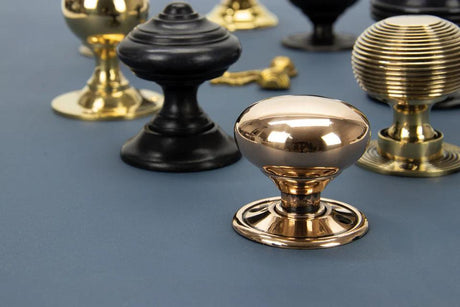
Original Georgian door handles were often knobs, but most people restoring a Georgian house today use a mix: Georgian door knobs on the principal rooms where the look matters most, and plain Georgian style door handles on a backplate where ease of use matters, such as bathrooms and bedrooms used by children. Keep the shapes simple, keep the finish consistent, and the doors will look right. Georgian door handles look best in polished brass or unlacquered brass, and plain knobs in the same finish can sit alongside them without clashing.
- Plain round or oval knobs, rather than heavily patterned ones.
- Slim, gently curved levers on a backplate, rather than chunky modern shapes.
- Reeded details, which suit Georgian and Regency homes.
- Rim knobs where the door has an original rim lock on its face.


Victorian (1837 to 1901)


Edwardian (1901 to 1910)


Knobs or Levers for a Georgian or Victorian Door?
| Door knobs | Lever handles | |
|---|---|---|
| Look | Most authentic for Georgian and Victorian doors | Suits Edwardian and later homes |
| Lock | Mortice knobs with a mortice latch, or rim knobs with a rim lock | Mortice latch or sash lock behind a backplate or rose |
| Ease of use | Need a grip and twist | Easier for children and older people |
| Latch needed | A 3 inch tubular latch or longer, so knuckles clear the frame | Standard tubular latch or sash lock |
| Bathroom | Add a bathroom bolt or thumb turn | Bathroom backplate or rose with thumb turn |
Heritage Brass mortice knobs are sprung on one side only, and work best with a 3 inch tubular latch or longer. Our mortice knobs and rim knobs guide explains the latches and sizes in detail.
Reeded Door Handles: A Classic Period Detail


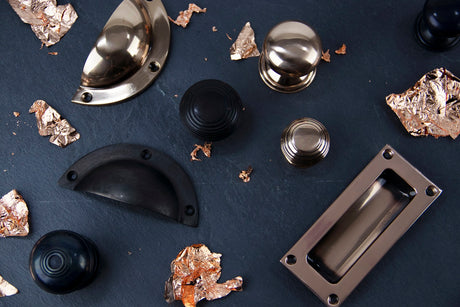
Best Finishes for Period Door Handles
- Polished brass: the classic bright brass of Georgian and Victorian homes, lacquered to keep its shine.
- Antique brass: a darker, aged brass that looks at home on original doors straight away.
- Unlacquered brass: ages naturally to a warm patina, the most authentic look for a restoration. See our unlacquered brass guide.
- Polished nickel: a warm silver that suits grand Victorian and Edwardian interiors.
- Porcelain: Heritage Brass porcelain door knobs come in plain white, gold line, white crackle and cream crackle, on porcelain or solid brass bases, a classic Victorian look.
For a full comparison of how each finish looks and ages, read our solid brass finishes guide.
Completing a Period Door
- Escutcheons and keyhole covers in the same design as the knob or lever.
- Finger plates on busy doors, a traditional Victorian detail.
- Solid brass butt hinges in the same finish, so the knuckles match.
- Front doors: Victorian door knockers, letter plates and centre door knobs. Our door furniture accessories guide covers them all.
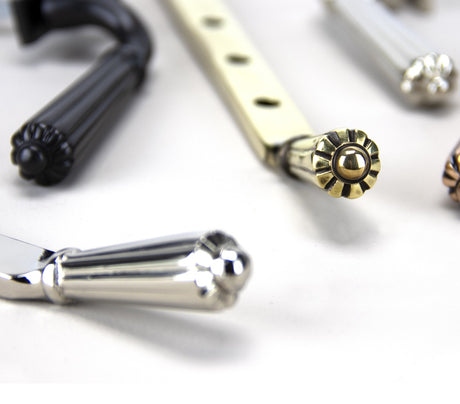
- Windows: sash fasteners and sash lifts in the same finish. See the window furniture guide.


Tips from Our Trade Counter
- Take a photo of the old handle or knob and the edge of the door before you remove anything. It tells us the latch or lock type.
- On original doors, a backplate is often the easiest way to cover the marks left by old fittings.
- Check door thickness. Old doors vary, and a thicker door may need a longer spindle.
- Use one style and finish per floor, rather than mixing eras from room to room.
- If in doubt, keep it simple. Plain brass knobs and Georgian door handles on a backplate suit almost any period home.
Frequently Asked Questions
What door handles suit a Georgian house?
The best Georgian door handles are simple: brass knobs or plain levers on a backplate, in polished, antique or unlacquered brass. Avoid heavy decoration.
What door handles suit a Victorian house?
Mortice knobs on rose or plate are the classic Victorian choice, including reeded, beehive and porcelain knobs. Shaped levers on long backplates also suit Victorian panel doors.
What door handles suit an Edwardian house?
Shaped lever handles on long backplates suit the tall panel doors of Edwardian homes, in polished brass, antique brass or polished nickel.
Should I choose door knobs or levers for a period home?
Knobs are the most authentic for Georgian and Victorian homes. Levers are easier to use and suit Edwardian and later homes. Both are made in traditional designs.
What latch do I need for mortice knobs?
Heritage Brass mortice knobs work best with a 3 inch tubular latch or longer, so your knuckles clear the door frame when you turn the knob.
Which finish is best for period door handles?
Polished brass and antique brass suit most period homes. Unlacquered brass is the most authentic for a restoration, as it ages naturally.
Summary
Georgian door handles should be simple: plain brass knobs, or slim levers on a backplate.
Victorian homes suit mortice knobs, including reeded, beehive and porcelain designs.
Edwardian homes suit shaped levers on long backplates.
Polished, antique and unlacquered brass are the classic period finishes.
Mortice knobs need a 3 inch tubular latch or longer, and matching hinges, escutcheons and window fittings complete the look.